
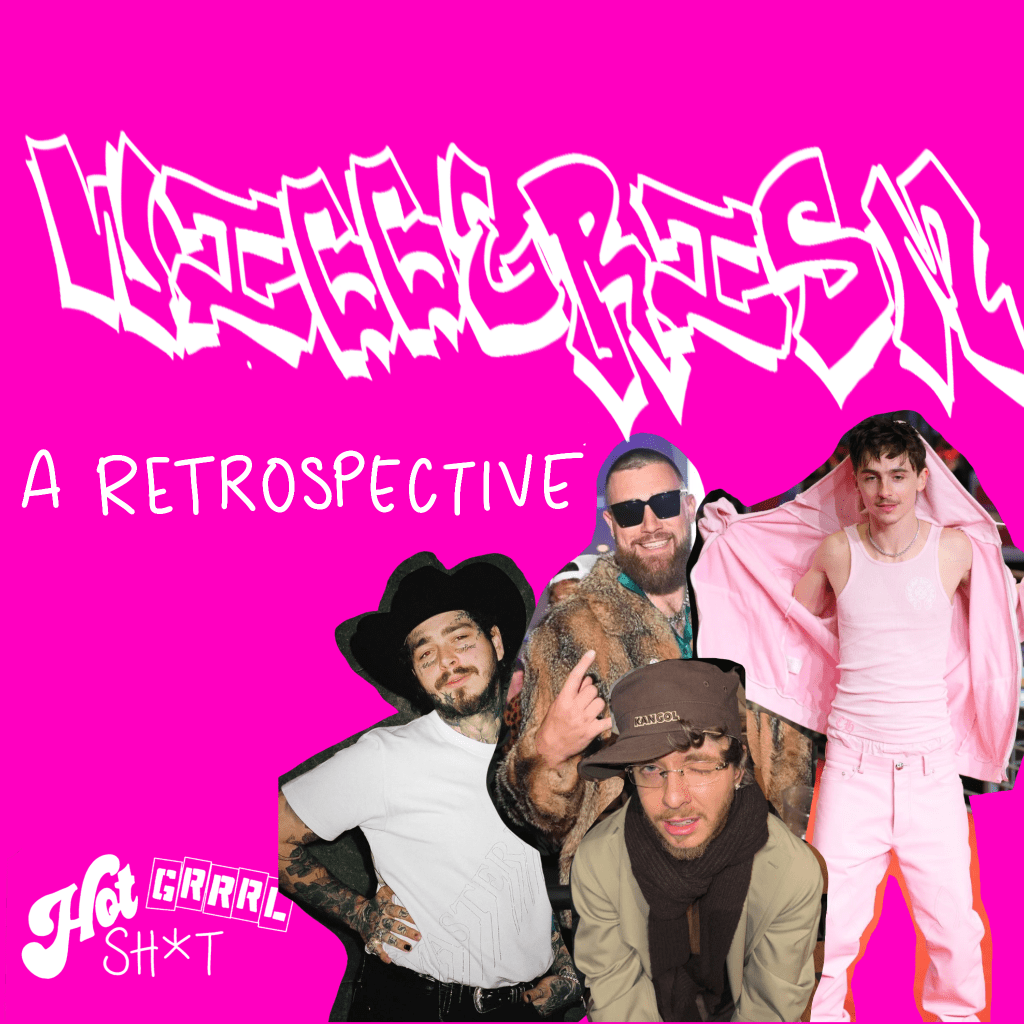
I’ve been thinking a lot about wiggers lately. Truth be told, I’m sort of always thinking about them. I consider myself something of a wigger anthropologist. I’ve made zines about white rappers, I have a Beastie Boys tattoo, and I listen to Yung Lean, Macklemore, and Kreayshawn. I cried when Little Peep died, you get the idea.
I’ve been fascinated by wiggers for as long as I can remember. If I had to guess where the fascination stems from, I would say that my upbringing in predominantly white spaces had something to do with it. Maybe it’s because I went to school with more ‘wiggers’ than actual black kids. Maybe I see their desperation to appeal to Black society as a fucked-up foil to my own experience assimilating into white culture growing up. Or maybe I just think they’re funny and I like saying wigger.
But in the last few decades, there’s been a sinister shift in wiggerism, exacerbated by the internet.
Before the advent of the internet, to truly be a wigger, you had to know at least one Black person, or you had to seek Black culture out. Now, white kids in Vermont comfortably throw around AAVE they’ve learned from TikTok comments, wear Timbs to look like Timothee Chalamet, and walk around with fades inspired by Travis Kelce, despite not knowing any Black people or meaningfully engaging with any Black media.
Being a wigger once signified, at the very least, an interest in Black Culture, but now that Black culture has been co-opted by the internet, wiggerism has become pure simulacrum. A watered-down telephone game of what it means to ‘act Black.’
The first mainstream recorded use of the word I could find appears in a 1988 Washington Post article, and is described by an interviewee as ‘a white person who acts Black’. This article was released a year after Beastie Boys’ (who some might argue were the prototypical wiggers) License to Ill became the first rap album to reach number one on Billboard, and a year before Will Smith would make history as the first rapper to win a Grammy for Parents Just Don’t Understand.
The mainstream rise of Hip-Hop in the late 80s and early 90s gave white, suburban America a front row seat to Black culture from the comfort of their stereos. The shift from the idolization of the rock star to the rapper gave white kids the blueprint to an incredibly narrow perception of Blackness.
But the idea of white people aligning themselves with Blackness didn’t start in the 80s. Before there was the wigger, there was the nigger-lover, a title that I, personally, find to be far more noble than wigger (though I understand why it’s not widely used). A nigger-lover insinuates a genuine care (not a fetishization) for Black people and Black culture. It also connotes a historical level of involvement with and support of Black liberation. It is also a term not exclusive to white people. It can be applied to any non-Black ally.
The term was born during the abolition era to describe white abolitionists who were seen as race-traitors for aligning themselves with the freedom of Black people. It was also heavily used during the Jim Crow era for White civil rights activists. To be a nigger-lover wasn’t just to know a few jive terms or jazz songs; it meant putting reputation as a respected member of white society on the line, to be an ally to the Black community.
It brings to mind an artifact from the civil rights era: the honorary negro card. Unlike the cookout invites or the n-word passes of the 21st century, these cards served to protect white allies during race riots, as the card states. Honorary negro cards also had to be signed by an actual Black person.
In today’s day and age, there’s no real negative societal consequence for white people who act Black. Besides, if honorary negro cards were still circulated today, I’m sure hundreds of former wiggers would be reselling them on Stock X and making bank.
Journalist Van Lathan recently coined the term “White Vacationers” to refer to white celebrities who gained notoriety for ‘acting Black’ only to realign themselves with white society. Think Jelly Roll, Post Malone, Travis Kelce, MGK, even the Kardashians.
With Black culture becoming increasingly homogenized as ‘internet culture’, is there still a need for wiggers? Will bored white kids finally accept their place in society and leave us alone? Or will they find a new, more niche cultural group to vulture over until its carcass is clean?
 Hot Grrrl Shit
Leave a comment