
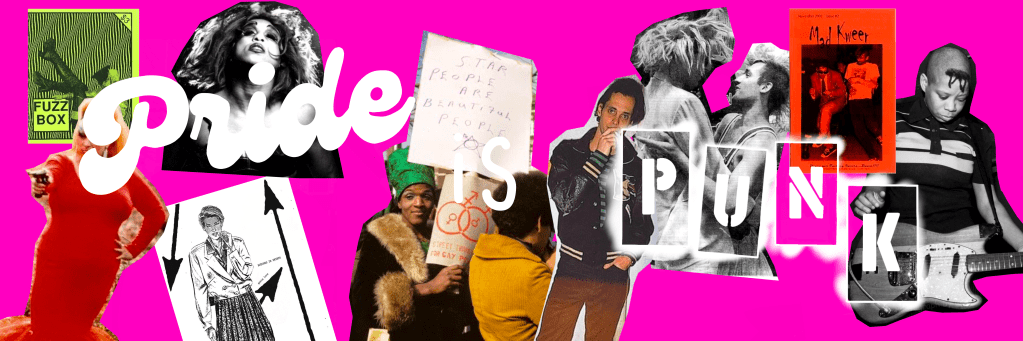
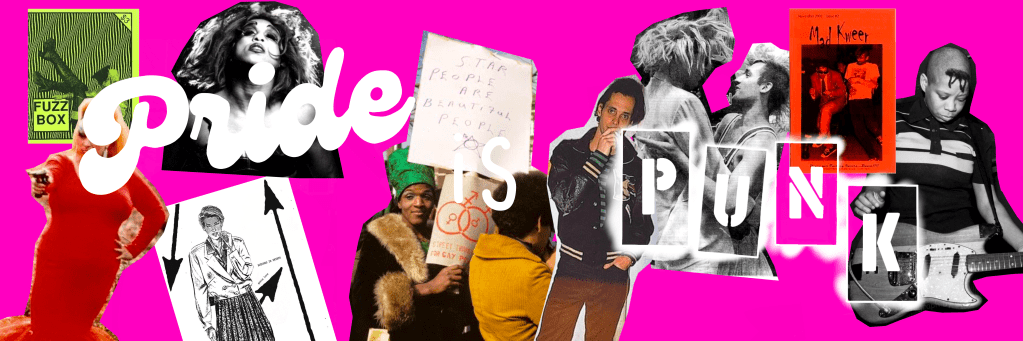
I knew I wanted to do something for Pride Month, but the last thing I wanted to do was feed into the coporporate capitalization of Pride. I wanted to do something that felt true to the purpose of Hot Grrrl Shit, and also something that felt true to the punk orgins of Pride, while highlighting queer voices. To honor Pride, I decided to talk to some of my friends who are immersed in the PNW punk/art scene, and queer. They’re also all incredibly talented and kind and I love them all dearly.
Addy HD
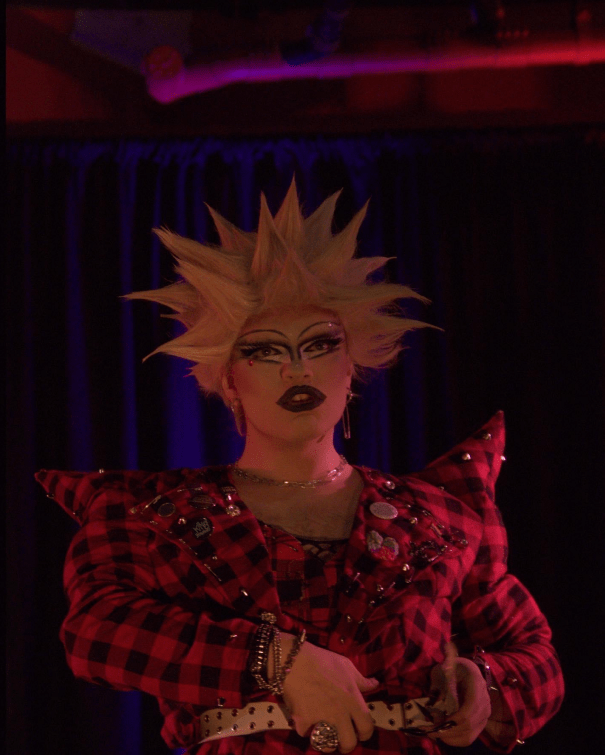
Hi there, my name is Addy HD (she/they) and I’m a drag artist based primarily out of
Bellingham, WA, but love to perform anywhere I can. I love to connect with the audience and
show what I’ve got. I want to make everyone fall in love with drag to the extent that I’m in love
with it. My drag is all about self-expression and making people happy. I live to make connections
and just have fun!
How do you think developing pride in your gender identity and sexuality helped you develop your confidence
“Once I knew that I was on the queer spectrum, I knew it was only a matter of time before I told
someone, being that I literally cannot keep my mouth shut, so when I finally told someone about
how I was feeling I felt the biggest relief in just letting it out.
I think the second that I fully accepted myself as a non-binary queer individual everything about
myself just became so much more of me. I finally was confident in the clothes that I was
wearing, my mannerisms, my interests and hobbies. It was like a weight on my back was lifted
off.”
When/how did you get into drag?
“I first started getting the inklings of wanting to do drag right before the pandemic hit, I was
seeing these larger than life performers on my youtube and TV and just fell in love with them.
Once we were all in lockdown I spent many hours just watching so much of these performers
and just wanted to be exactly like them. I was enamored by the energy that they brought and
the power that they held.”
How do you incorporate Seattle’s rich punk history into your drag?
“Being in the area that I am in, it has really pushed me to think outside of the box and loose the
preconceived notions that I have around the type of art that I do. Seattle and Washington drag in
general is very alternative and it has encouraged me to explore different facets of myself that I
hadn’t previously done. I love to take from the strong alternative scene that Seattle produces
and infuse it in what I do. I love taken inspiration from the Riot Grrrl movement that started here
and use not only songs from people like Bikini Kill, Sleater-Kinney. Bratmobile etc… but also the
energies that they brought, the messages that they shared, and the way that they performed.”
How does your sense of pride in queer spaces differ from the commercialized pride you see in June?
“It’s honestly kinda annoying at this point the lengths that companies will go to make queer
people feel included and then turn around and do actions that actively discriminate against the LGBTQ+ community. WIthin queer spaces its a completely different narrative, it’s more free and
open, rather than shoving rainbows and “love is love” signs down our throats, it’s about love and
being free to express ourselves how we want to, not how they think we want. It’s about building
community and appreciating ourselves for what we are, not what they tell us to be
What advice do you have for people who want to become more active in queer spaces?
“Don’t be scared to put yourself out there! Show up and show out! It’s an amazing experience
being with so many people that you can see yourself in and it is a place that can really help you
grow!. If there isn’t any spaces near you, create one! If you don’t feel like you can go in person,
check out online meetups and hangouts for queer people, there’s something for everyone!”
How do you make pride radical in your everyday life?
“I make pride radical by being completely 100% me, unapologetically and unashamed. Pride in
it’s truest sense is a demonstration of who you are so it is important to not change yourself to fit
the ideas of others. Indulge yourself in the books and art that was banned for being too
homosexual, listen to the music that makes people turn their heads in disgust, as long as you
enjoy it, it is important to celebrate it.”
Allie
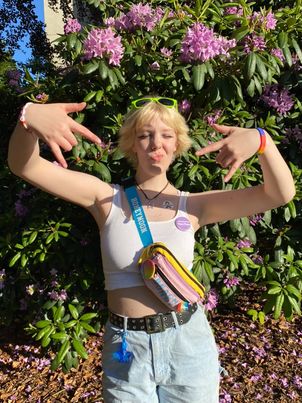
hey i’m allie and i use they/them pronouns!!
How did you find the punk scene?
“I found the punk scene through my friend who wanted to go to a show and i just came along for the ride 🙂 the best shows are when you get invited super last minute, and don’t know a single one of the bands. “
How have punk spaces been accepting or isolating you as a queer person?
“Every punk space has been so accepting of queer people!! the first show that i went to had a sign reading something along the lines of ‘no weapons, no vandalism, no homophobia, transphobia or general bigotry.’”
What advice do you have for queer people looking to become active in the punk scene?
“My advice for people is if you find a show, just go!! more than likely you will have a lot of fun and leave with more friends than you came with. “
Juli
“I’m juli (she/her), and my passion is in design justice, as an aspiring architect hoping to create true safe spaces for marginalized communities like mine. and like, I’m talking more than your average corporate-glitter-sticker “safe” spaces. I’m a queer woman of color and we deserve better than that. when I’m not in studio, I’m causing good trouble all over the PNW, or creating personal art, or doing both at once (my favorite).”
How long have you been aware of zines, and when did you really get into zine culture?
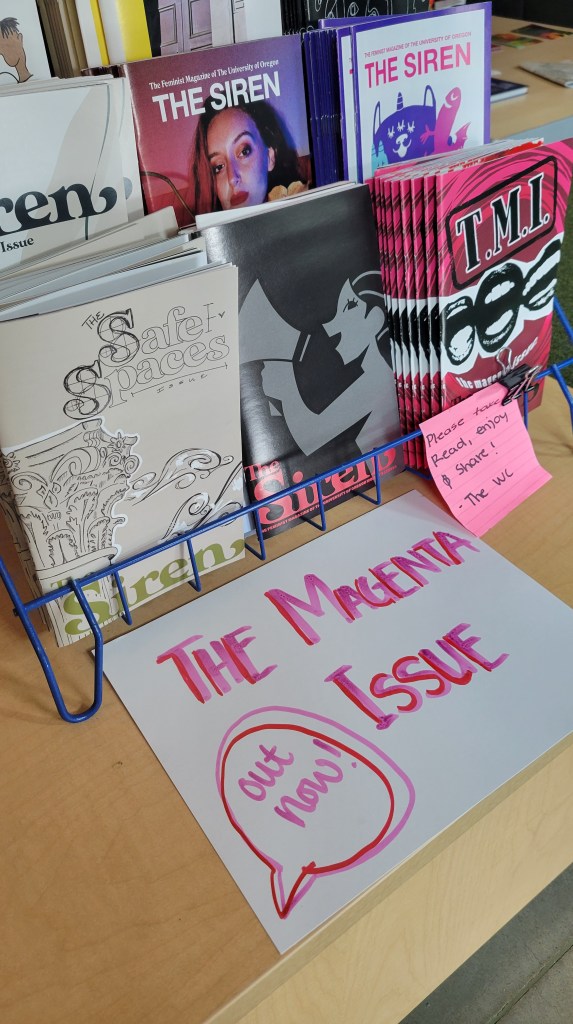
“it must’ve been only a year or two ago that ami got me really thinking about them—last summer, she showed me her collection, and it was also last June when I took every physical copy of The Siren I could find during my visit to UO! flash forward into fall term, and I’m the assistant editor-in-chief for The Siren as a new addition to The Feminist Hive. since then, zines have been a part of my everyday life, and I’ve loved collecting them from the College of Design and all around campus—I think it’s one of the things I miss most about the school year being over.”
How long have feminism and queerness been a tie-in for you with zines?
“to me, feminism, queerness, and zines/art are as inseparable. The Siren is a contribution-based, intersectional feminist magazine that creates and publishes in solidarity with its contributors, readers, and community—and we are not unique in this within the zine community. Zines are kind of like this creative, evocative, powerful playground for me. the language of activism has always been inaccessible to certain groups (I, for one, am still under the impression that I’m terrible at English, thanks to my ESL teachers back in the day. not to mention the lack of base-level intersectionality in many feminist efforts or *shudder* corporate DEI trainings). so, for zines to provide this canvas to enable and encourage people to tell their stories and share their messages in a way that is true to them and accessible to their audience—that’s really inspiring for me. it’s genuine and beautiful and it gives me so much hope whenever I feel crushed by institutionalized art and design (colonialist architectural theory is one of my many enemies at this point in time). Zines are something you get to interact with, and learn from, and play with—it can’t be taught anywhere else, and that sounds like the language of revolution to me.”
What has your experience been like as a queer woman of color in predominantly white feminist spaces.
“I am so fucking tired, dude! like, I am so sick and tired of being the “good” minority who politely offers her voice to a board meeting and never questions the depth of anybody’s feminism. so many people get away with calling themselves feminists without ever thinking about whether their activism is just self-serving, if it is helping as many people as it can help, or if it’s actually even harming people who need feminism the most, and I can’t even tell anymore, how much ignorance people have to be privileged with to require so much guidance. it’s hard to reconcile how often it is that the marginalized groups themselves have to be ones organizing for their own advocacy—and how little power we have in comparisson to begin with. honestly, it feels like every moment of my existence is just like an educational opportunity—if not a burden—to my peers and to people in power. and I get that a lot of people in Oregon have maybe never even seen a fully Asian woman before, let alone a queer one, let alone one that is so fired up and vocal, but it has made it so clear to me that we need to band together and find what it takes to be heard. this is especially true in a predominantly white institution and a predominantly white state. now more than ever, I know what it means to take up rightful space, to speak truth to power, and to protect my peace as an activist.”
How do you personally recon with Riot Grrrls’ history of white feminist/trans-exclusionary feminism?
“it doesn’t do anybody justice to act like the feminist movement isn’t plagued with a white/anti-trans history—especially when many feminist spaces continue to be homes for TERFs and self-serving or otherwise ignorant white feminists. but, this movement is also rich with women of color—and trans and queer women of color—who had, and have been, and are making waves. I think it’s best to approach history with that lens: to recognize that we are still feeling the impacts of a racist, sexist, elitist history which continues into today, but that we can combat these forces by radically uplifting voices that have been purposefully and systematically silenced. we can’t be hopeless, because when we know better, we can do better. and so, I think it’s important to practice calling-in allies who want to do their best, and to be cognizant of why people may or may not be speaking. it’s our job to create spaces for people to be authentic without placing more of a burden on them in order to take up that space, because it’s so important to de-centeralize power in any space, and to hear people out equitably. it takes intentionality, and it takes real action—not just a face-value awareness of this past and a false promise to do better next time. we can, and we will.”
How do you make pride radical in your everyday life?
“pride, to me, is the embodiment of being both a lover and a fighter. I take pride in protecting and affirming those who fight beside me. pride empowers me to use my voice, even if it quivers. and I am proud to be who I am and love who I do. I will be radically embracing my fear, hurt, and anger as an activist (and a resident of this Hellscape™️), and I will be radically accepting and in love nonetheless. pride is protest and bravery and celebration, and it’s how I choose to live everyday.”
 Hot Grrrl Shit
Leave a comment